









What Your Real Estate Website Should Say About You (And What It Probably Doesn’t)
If someone visited your website right now, and they had never heard of you before, what would they learn about you, your brand, and your business? Not just your phone number or your email address, but who you actually are, what you stand for, what kind of experience you bring, and why they should trust you with one of the biggest decisions of their life.
For most real estate agents, the answer is: not too much. Most agent websites have a headshot, a bio, some listings, a contact form, and that’s about it. There’s often nothing that tells a person what it’s actually like to work with you, what kind of clients you help, or why you’re any different from every other agent in the market.
Your website isn’t just a place for people to find your contact information. It’s the place where someone decides whether they trust you enough to reach out, and if your website doesn’t give them a reason to, they’ll move on to someone whose website does.
That’s a problem, because the people visiting your website are actively trying to figure out whether you’re the right person for them, and if your website doesn’t help them answer that question, you’re losing people before you ever get the chance to talk to them.
It Should Clearly Say Who You Help
One of the most common things missing from real estate websites is any real clarity about who the agent works with. Most agent websites are made to appeal to anyone and everyone, and the result is messaging that connects with no one.
If your website says something like “helping buyers and sellers achieve their real estate goals,” that doesn’t tell anyone anything specific about who you are or what you do. It sounds like every other agent’s website, and it doesn’t give a person any real reason to believe you understand their specific situation.
Your website should clearly communicate who your target audience is and what situations you help people navigate. For example, if you specialize in working with people who are downsizing, your website should clearly show that. Or if you focus on first-time buyers in a specific area, your website should speak directly to them, their concerns, and their questions.
When someone lands on your website and immediately feels like it was built for them, that’s when trust starts to build. When they land on your website and it could belong to any agent in any market, they have no reason to stay, and they have no reason to trust you.
★ Want to learn more about defining your target audience? Have a look at these posts:
- Why Defining Your Target Audience Is the Most Important Part of Your Marketing Strategy
- Why Your Target Audience Shouldn’t Be Anyone and Everyone
- How to Build a Real Estate Inbound Marketing Strategy Around a Single Niche
It Should Clearly Say What You’re Known For
Your website should make it clear what you offer that’s different from everyone else, in a way that matters to the people you want to work with.
That could be your experience with a specific type of situation, like helping families navigate selling a home after the loss of a parent. It could be your knowledge of a specific market or neighborhood. It could be the way you communicate, the way you guide people through making difficult decisions, or the approach you take to making sure your clients feel informed and supported throughout the buying or selling process.
Whatever it is, your website should communicate it. It shouldn’t be buried in a paragraph at the bottom of your about page, but rather, deeply ingrained into your messaging, your content, and the overall experience of being on your site.
Most agent websites skip this entirely. They list credentials, awards, and years of experience, but they don’t say anything about what they’re actually known for or what makes working with them different from working with someone else. Credentials tell a person what you’ve done, but your website should also tell them who you are.
It Should Clearly Show Your Expertise, Not Just Claim It
There’s a big difference between saying you’re an expert and showing it. A bio that says “trusted advisor with 15 years of experience” is a claim, but a blog full of detailed, helpful content that answers the questions your target audience is searching for is proof.
That’s where your content strategy comes in as one of the most powerful ways your website can communicate your expertise. When someone reads a post you’ve written about navigating a specific situation, drawn from your own experience helping people through it, they don’t need your bio to tell them you know what you’re doing. They can see it for themselves.
This is also how search engines and AI platforms evaluate your expertise. They’re not reading your bio and deciding whether to rank you. They’re looking at the depth, the quality, and the specificity of the content on your website. The more your content demonstrates genuine, experience-driven knowledge, the more likely it is to show up when someone searches for help with the topics you cover.
If your website doesn’t have a content strategy behind it, it’s making a claim without providing any evidence to back it up.
It Should Build Trust Before the First Conversation
The people visiting your website are in research mode. They’re not ready to pick up the phone. They’re reading, evaluating, and forming an impression of you based on what they find. Your website needs to build enough trust during that process that when they are ready, you’re the person they reach out to.
Trust gets built through a combination of things. Your content builds trust by showing that you understand the situations your audience is going through. Your brand builds trust by creating a consistent, professional experience across every page. Your reviews build trust by showing that other people have had a positive experience working with you. Your online presence builds trust by giving the same message everywhere someone looks.
The first conversation you have with a lead should feel like a continuation of a relationship your website has already started, not the beginning of a new one.
If your website doesn’t build that trust on its own, every lead that does reach out is starting from scratch, and you’ll spend more time convincing people to work with you instead of working with people who are already convinced.
★ Want to learn more about building trust through your website and your marketing? Have a look at these posts:
- Building a Conversion Strategy That Targets Your Silent Traffic
- How Establishing Empathy in Your Marketing Helps Build Trust Before You Meet
- The Steps to Building a Trustworthy Personal Real Estate Brand
It Should Reflect Your Brand, Not a Template
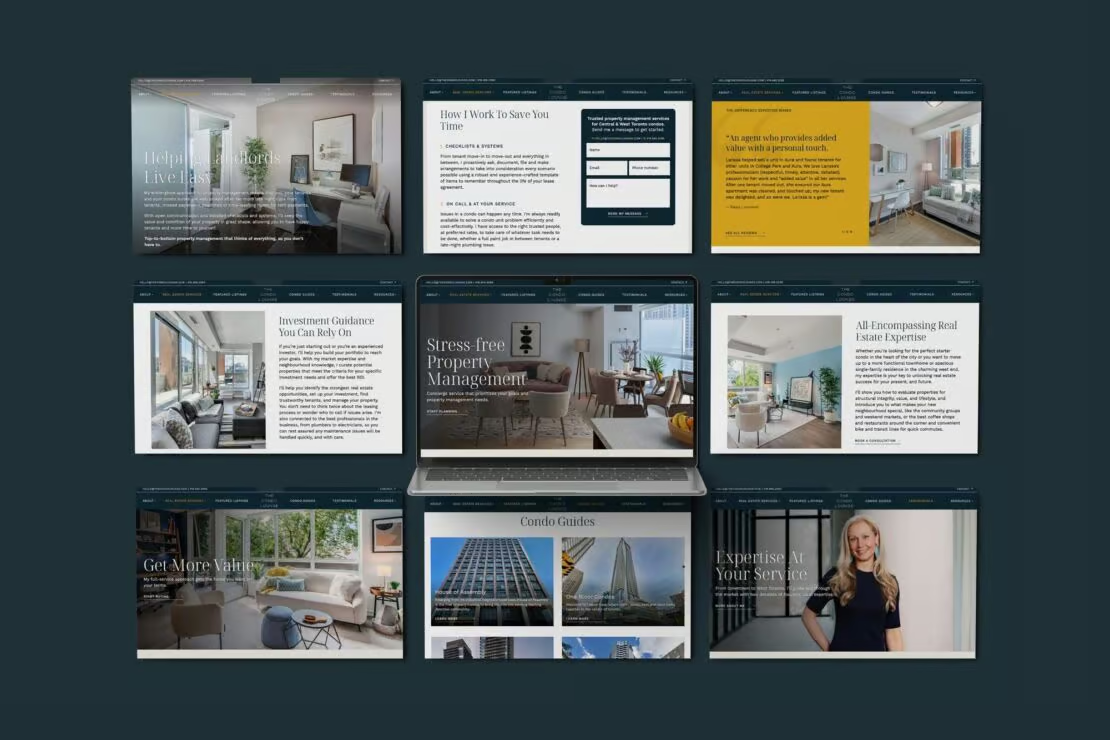
If your website is built on a template that looks like every other agent’s website on the same platform, it can’t say anything unique about you. It might have your name and your photo, but the design, the layout, and the experience are the same as hundreds of other agents, and that makes it very difficult for anyone to see what makes you different.
Your website should be an expression of your brand. The design, the tone, the messaging, and the overall experience should all feel like they belong to you and reflect how you want people to see you, your brand, and your business. When someone visits your website, they should get a sense of your personality, your values, and what it would be like to work with you.
That’s something a templated website can never do. A template gives you a website, but a brand-driven strategy gives you a website that actually means something.
Your Website Is Talking About You Whether You Like It or Not
Every person who visits your website is building an impression of you based on what they find and see. If your website clearly communicates who you help, what you’re known for, and why someone should trust you, that impression works in your favor. If it doesn’t, that impression is still being created, but it’s probably not the one you’d want.
The question isn’t whether your website is saying something about you. It’s whether it’s saying the right things.
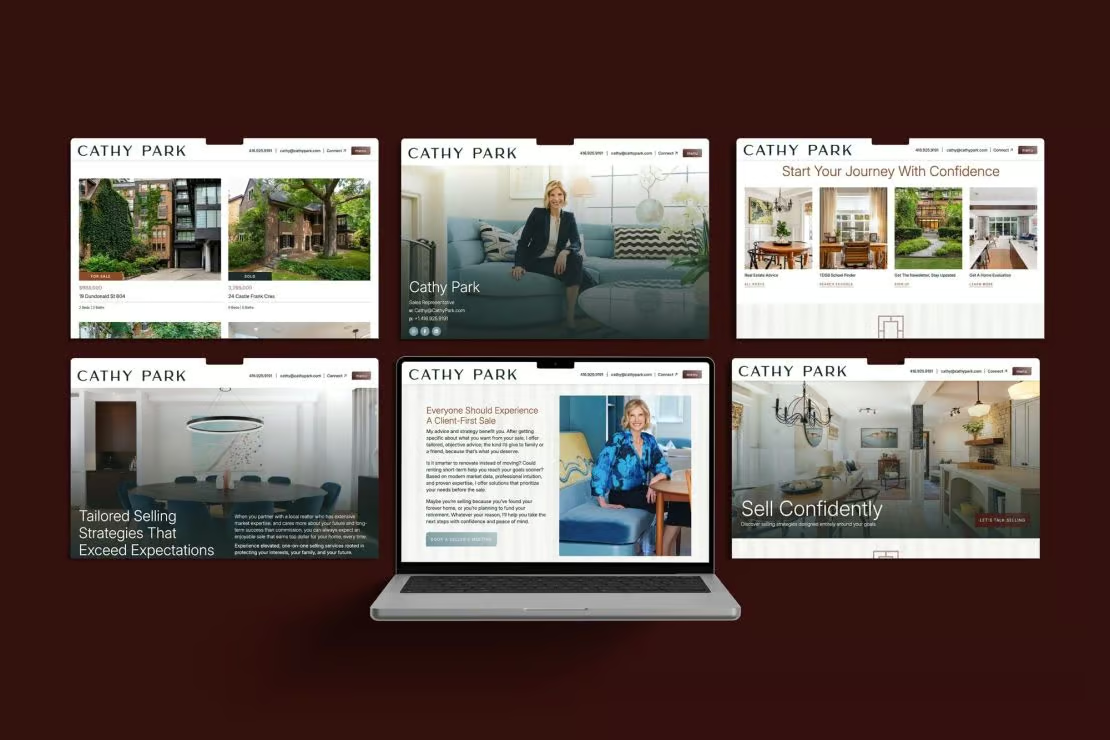
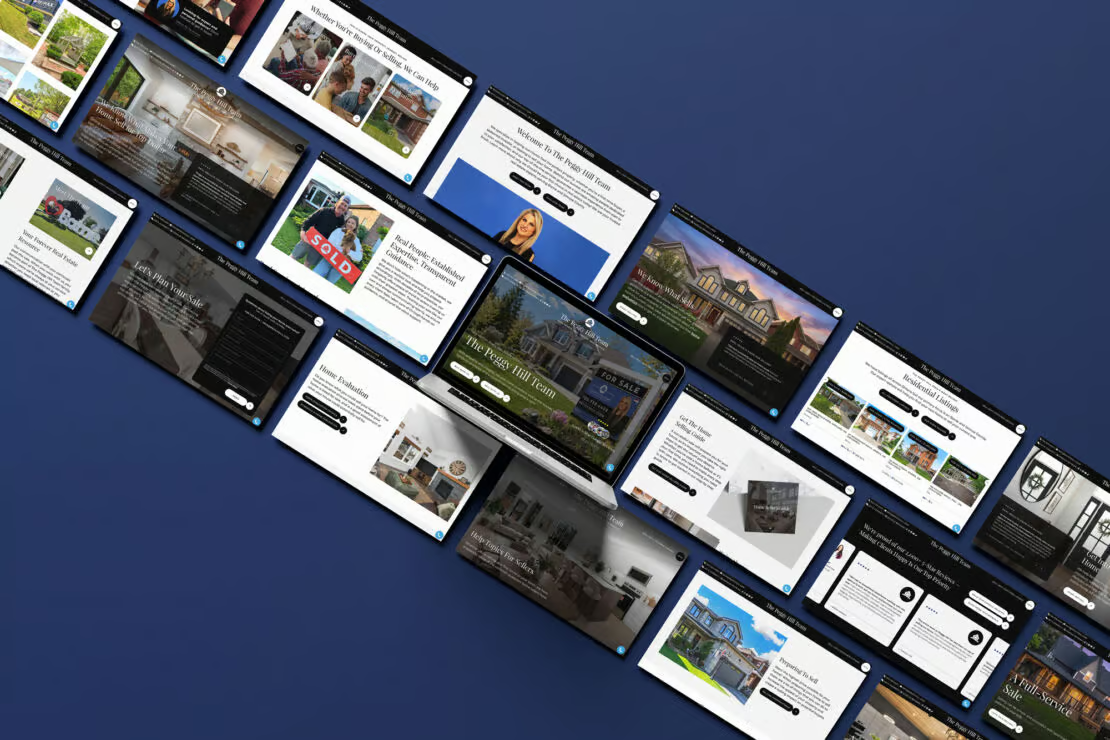
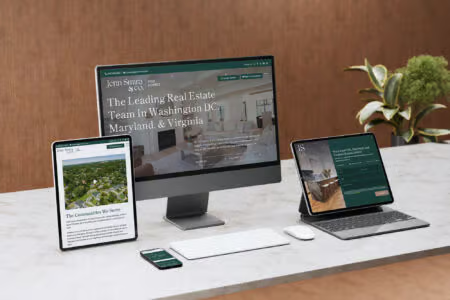
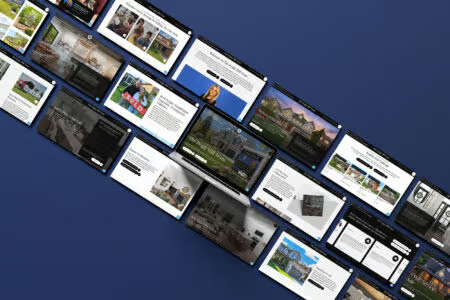
We believe our work is a true reflection of how we deliver on our mission to be: Inspired by Great Design, Driven By Strategy, Proven By Results. Wondering if Artifakt Digital is the right choice for you? Get started by having a look through our portfolio of work we’ve done for other real estate agents.