










How to Build a Website That Answers Questions Before Your Leads Even Ask Them

If you were to look at the majority of real estate agent websites right now, you’d notice something they almost all have in common: their websites are all focused on searching for homes for sale.
There’s usually an IDX feed, a map-based property search, a “search homes” bar front and center on the homepage, and then everything else is built around that, often with very little thought, effort, or strategy.
And it makes sense why agents focus on that approach. It’s usually because every other agent does it, but also, because doing so feels intuitive; people looking for homes will want to search for homes, and if they can do that on your website, they’ll keep coming back and eventually might convert. But the reality is, most buyers aren’t searching for homes on individual agent websites.
Instead, they’re using the major portals, like Zillow, Realtor.com/.ca, HouseSigma, etc, because those platforms have more listings, better search filters, more accurate results, and usually a more seamless search experience than any single agent’s IDX feed can ever provide.
So while most agent websites are built around a tool that visitors aren’t really using, those same visitors are searching for something else entirely: answers.
Buyers are searching for how property taxes work in a specific neighborhood; sellers are trying to figure out whether staging is worth the investment; first-time buyers are asking about closing costs, pre-approval timelines, and what to expect at a home inspection.
And increasingly, they’re not just typing those questions into Google; they’re asking AI platforms (like ChatGPT, and Google Gemini), and expecting a direct, well-sourced answer.
So the question is: when those people search, does your website show up as the answer?
A question-first website is one that’s structured around the actual questions your target audience is actively asking and searching for, so that instead of building everything around a listings search tool, you’re building it around the concerns, decisions, and uncertainties your audience is actively trying to resolve, right now.
The websites that consistently generate high-quality, ready-to-transact leads aren’t the ones with the best IDX integration; they’re the ones that start with what the audience is looking for answers to, and everything else is built around that.
1. Start by Identifying the Questions Your Audience Is Actually Asking
The first, main foundation of a question-first website is knowing what your target audience is actually asking and searching for; and the good news is you don’t have to guess because you probably already know.
Just start with the conversations you’ve had with your leads and clients, and the questions that came from that, like the concerns buyers have before making an offer, the anxieties sellers express before listing their home for sale, or anything else that you’ve been asked consistently.
Whatever questions people are asking you, other people are most certainly searching for answers for online, and if your website has dedicated content that answers them, you’re positioning yourself as the authority on the topics that matter most.
The most effective content strategies aren’t built around what you want to say, but instead, they’re built around what your audience needs to hear, and when you structure your website that way, your content does the work of building trust before you even have a conversation.
2. Build Content That Answers One Question Thoroughly, Not Ten Questions Superficially
Another big mistake (and missed opportunity) that a lot of real estate agents make in their content strategy is trying to cover too much of a topic in a single post.
For example, a blog post called “Everything You Need to Know About Buying a Home” ends up being way too broad to be genuinely helpful to anyone, and too shallow to demonstrate any actual expertise.
Instead, a better approach is to write a detailed, in-depth post about an answer to a single question per piece of content. If a first-time buyer wants to know how the closing process works, that should be its own dedicated, long-form post, not a bullet point list buried inside a larger overview type of post.
Search engines and AI platforms increasingly reward content that provides comprehensive, authoritative answers to specific questions, so a thorough post on one topic will almost always outperform a surface-level post that tries to cover five topics.
But it’s also good for your audience. That’s because when someone looks for an answer to a question and lands on a blog post that directly and completely answers their specific question, it creates a moment of trust; they feel like you understand what they’re going through, and you’ve shown that you’re knowledgeable about the topic.
★ Want to learn more about building an answer-based content strategy? Have a look at these posts:
- How Solving Your Audience’s Problems Gets You Higher Quality Leads
- Building a Real Estate Solutions-Based Marketing Messaging Strategy
- Building a Lead Generation Strategy Through Education
3. Structure Your Website So Questions Lead to More Questions
Answering one question well is a strong start, but the real power of a question-first website comes from how those answers connect to each other.
When someone finishes reading your post about how closing costs work, the natural next question might be about how to budget for a home purchase or what to expect during the inspection process.
If your website anticipates those follow-up questions and provides a clear path to the next piece of content through internal linking, you can create a guided experience where each page builds on the last.
So, instead of a single visit that ends after one post or page, you get an engaged session where the visitor is reading multiple pieces of content, building familiarity with your brand, and developing the kind of trust that leads to an eventual conversation.
Think of your website like a well-organized library: every post should know what the person visiting might want to read next, and make it easy for them to get there without having to search for it.
That’s also where a pillar page strategy comes in. When you build a central pillar page around a broad topic (like buying a home in your market) and surround it with supporting content that answers a specific sub-question in detail, you’re creating a content strategy that works the way people actually research and make decisions (and you’ll be rewarded by both search engines and AI platforms in the process).
4. Write for Both Search Engines and AI Platforms
For years, everyone has been working to write content that ranks well in Google and traditional search engines, and while that’s certainly and absolutely still important, it shouldn’t be the only thing you’re considering.
You need to consider both traditional search and AI search.
That’s because AI platforms pull information from websites to generate direct answers, which means your content has the potential to show up as the actual source behind a conversational answer.
The good news is that the techniques that make content effective for AI platforms are largely the same ones that make it effective for traditional search: clear, well-structured answers to specific questions, organized with logical headings, written in plain language, and backed by genuine authority.
AI platforms tend to favor content that defines terms clearly, organizes information in a logical way, and doesn’t require the person or the AI model to do a deep dive to find the answer they’re looking for.
So when you’re building out your question-first content, make sure the answer to the main question is clear and easy to find, without burying it somewhere deep within your post in an FAQ or bullet point list.
★ Want to learn more about building an AI visibility strategy? Have a look at these posts:
- Why Your Competitors’ AI Visibility Strategy is Probably Hurting Them
- How to Straighten Out Pre-AI Citations That are Confusing LLMs
- Why You Can’t Build an AI Visibility Strategy Without a Website
5. Turn Answers Into Conversion Opportunities
The whole point of a question-first website isn’t just to be a helpful resource; it’s to build the kind of trust and familiarity that turns a visitor into a lead, and eventually into a client.
But that conversion doesn’t happen by interrupting the experience with aggressive popups or forcing someone to fill out a form before they can read your content.
Instead, it happens naturally when the content inspires trust. When someone reads three or four of your posts, each one answering a question they genuinely had, they start to see you as someone who understands their situation.
At that point, a well-placed call to action, like a downloadable guide or resource, feels like a logical next step, not a hard sell.
The key is to think about conversion as the natural outcome of a valuable experience, not as the goal that everything else is in service of.
When your website answers questions before your leads even ask them, the conversion takes care of itself, because by the time someone reaches out, they’ve already decided they trust you, your brand, and your business.
Your Website Should Be the Answer, Not Just Another Result
The way people search for information is changing, and the websites that succeed going forward will be the ones built around the questions their audience is actively asking.
That means moving beyond the standard agent website structure of about, services, and listings, and building a content experience that positions you as the go-to authority in your market.
When you build your website this way, every page becomes an opportunity to build trust, demonstrate expertise, and create meaningful engagement that leads to high-quality leads — not because you asked for them, but because you earned them by providing something genuinely valuable first.
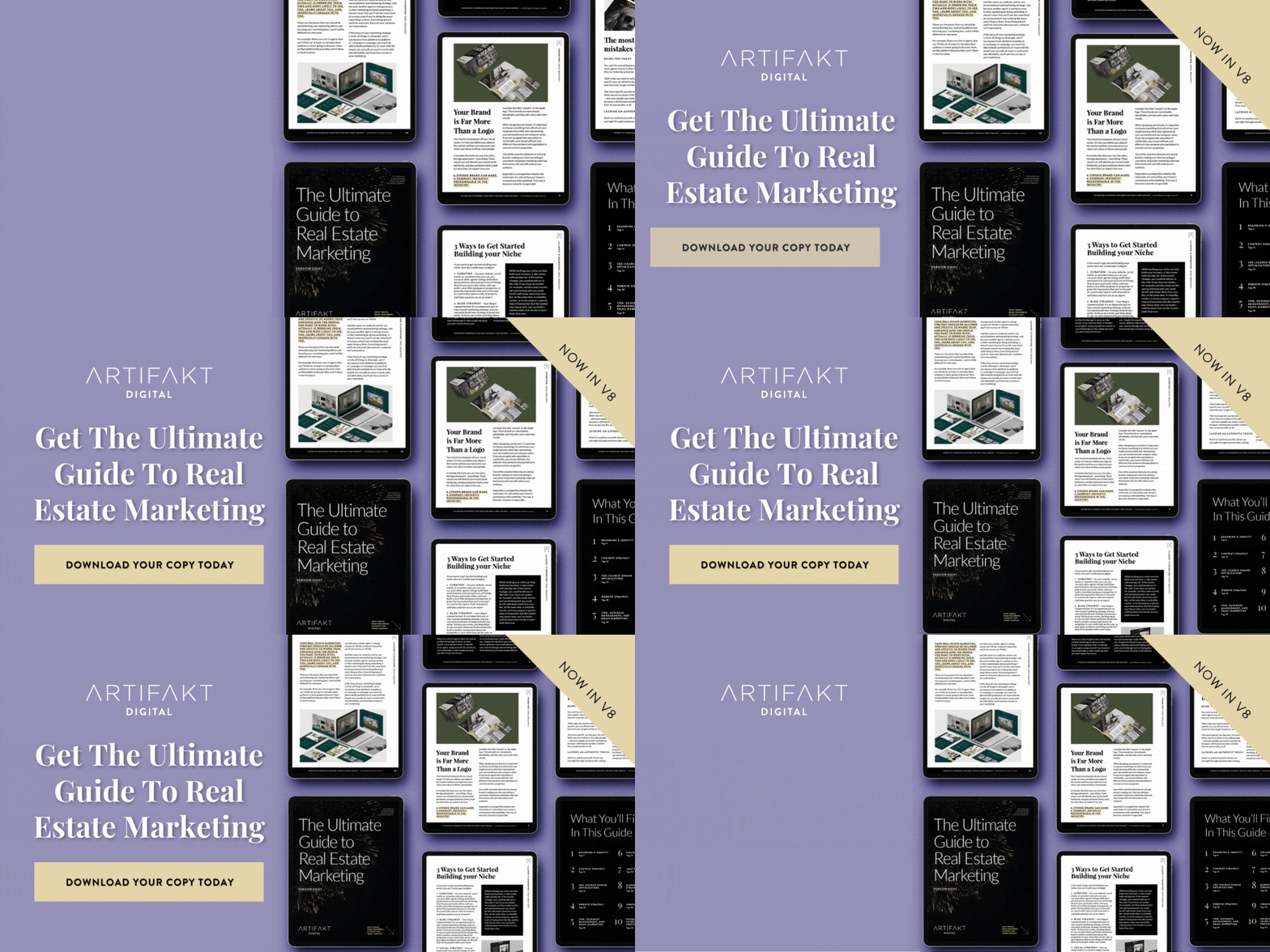
Want to drive traffic, build your brand, and engage your target audience? Download our eBook: ‘The Ultimate Guide to Real Estate Marketing’. It’s a collection of some of our best marketing articles, tips, and tricks that we’ve collected over the years.