












How to Prepare a Real Estate Website Project Brief (To Make Your Own Website Project Successful)
A successful digital strategy starts with a successful website. Without one, you won’t be able to build an effective marketing strategy that attracts the right people, at the right time, for the right reasons.
Your website is the main place where you can completely control how you, your brand, and your business are presented to your target audience. But for a lot of agents, beginning a new website project can seem overwhelming, especially if you’ve never done it before or if you’ve had a negative experience in the past.
That’s why the planning phase, before you begin building the website, is so important. A successful website project starts by working through the details and preparing a website project brief that outlines who you’re building your website for, what you need it to do, and how you define the success of the project.
Here’s how to get started.
Review Your Current Website and Digital Strategy
If you already have a website, the first step is to review it, even if it’s old or doesn’t perform well.
Start by looking at your website’s analytics to understand how people are currently using it. Review your traffic sources to see where visitors are coming from, which pages are the most visited, how engaged your visitors are, and what content is performing well.
The more you understand about how people currently use your website, the easier it will be to decide what to keep, what to change, and what to leave behind.
You should also consider whether there are any elements of your current website that are still relevant to your brand and your business, whether that’s content that still reflects how you want to position yourself, visual elements that are still part of your brand identity, or pages that have built up search authority over time.
If your website has an established history and has built up domain authority, understanding that ahead of time is critical. Communicating what’s important to the company building your new website helps make sure the successful parts of your current strategy are preserved through the transition.
★ Want to learn more about reviewing your digital strategy? Have a look at these posts:
- Best Practices When Rebuilding an SEO Successful Real Estate Website
- Measuring the Success of Your Digital Strategy Through Engagement
- How (and Why) to Audit Your Real Estate Website’s Content
Define Your Target Audience
To build a website that gets results, you have to clearly define who your specific target audience is. Your target audience is always who you work with now, who you want to work with in the future, and who you don’t want to work with.
This step matters because your target audience is who you’re actually building the website for. To build a website that attracts, converts, and produces results, it has to be built for the people who will actually be using it, not for yourself.
For example, if one agent’s primary audience is people over 65 who are downsizing, and another agent’s primary audience is people in their late 20s buying their first condo, those websites should be very different. The content, the tone, the calls to action, and the overall experience should be tailored to the specific audience each agent is trying to reach.
Start by asking yourself: who do you work best with? What type of person have you worked with in the past where the experience was genuinely great? Once you define that, you’ll likely find that your ideal target audience isn’t exactly the same as your competitors, even if you work in the same area.
Outline Your Business and What Makes You Different
The company building your website needs a solid understanding of what your business is about, what your unique offerings are, and what makes you different from your competition.
Being able to clearly communicate how you want to be positioned, what problems you solve for your clients, and what sets you apart is what allows the website to be built around those strengths rather than around a generic template that could belong to any agent.
This is also where your brand comes in. If you have brand guidelines, a defined brand voice, and a clear visual identity, those should all be part of the project brief. If you don’t have those things yet, the website project is often a good time to establish them.
★ Want to learn more about building your brand and positioning? Have a look at these posts:
- Why Every Agent Should Have Their Own, Personal Brand
- Creating a Real Estate Brand Identity Visibility Strategy
- Building a Real Estate Solutions-Based Marketing Messaging Strategy
Define Your Goals and How You Measure Success
To see success in your website project, you need to define how you actually measure that success, and you should be able to communicate that clearly before the project begins.
For a lot of agents, the goal is simply “to generate leads,” and while that’s a reasonable overall objective, on its own it’s too vague to plan around. The best place to start is by defining what a lead actually is to you: who is the type of person, how qualified are they, and what action do they take on your website that counts as a conversion?
You should also think about success at different stages: how you measure success during the project itself, how you measure it at launch, and how you measure it a year after the website goes live. Being able to communicate those benchmarks upfront helps everyone involved understand what the project is working toward.
Outline Your Requirements
Beyond the obvious requirements like timeline and budget, your project brief should include any specific functionality or technical requirements that are important to your business.
For example, do you need the website to connect to a specific CRM? Do you need forms that integrate with your email marketing platform? Do you need landing pages for specific campaigns or downloadable resources that capture contact information? Do you have existing content or a blog that needs to be migrated?
You should also consider your content strategy as part of the requirements. Your website should be structured to support a blog, internal linking, and the ability to add content over time, because your content strategy is one of the most important parts of your long-term search and AI visibility strategy.
And importantly, your website should be built on a platform you own and control. If you’re considering a proprietary platform or a SaaS subscription model, it’s worth understanding the long-term implications of that decision before you commit.
Choose the Right Partner
Choosing who to work with on your website project is one of the most important decisions you’ll make. The right partner should have experience in the real estate industry, a strong portfolio of work, and a process that helps guide you through the planning and strategy work described above.
Take your time researching providers, interviewing multiple companies, asking detailed questions, and reviewing their previous work. An experienced partner should help guide you through most of the planning as part of their process, and if they don’t, that’s worth considering before you commit.
The right partner won’t just build you a website. They’ll help you build a digital strategy that supports your marketing, your content, your search visibility, and your long-term business goals.
An Investment in Your Business
A website project is an investment in yourself and your business. The more planning and preparation you do ahead of time, the more successful the project will be, and the stronger the foundation you’ll have for everything that comes after it, from your content strategy to your search visibility to your overall marketing plan.
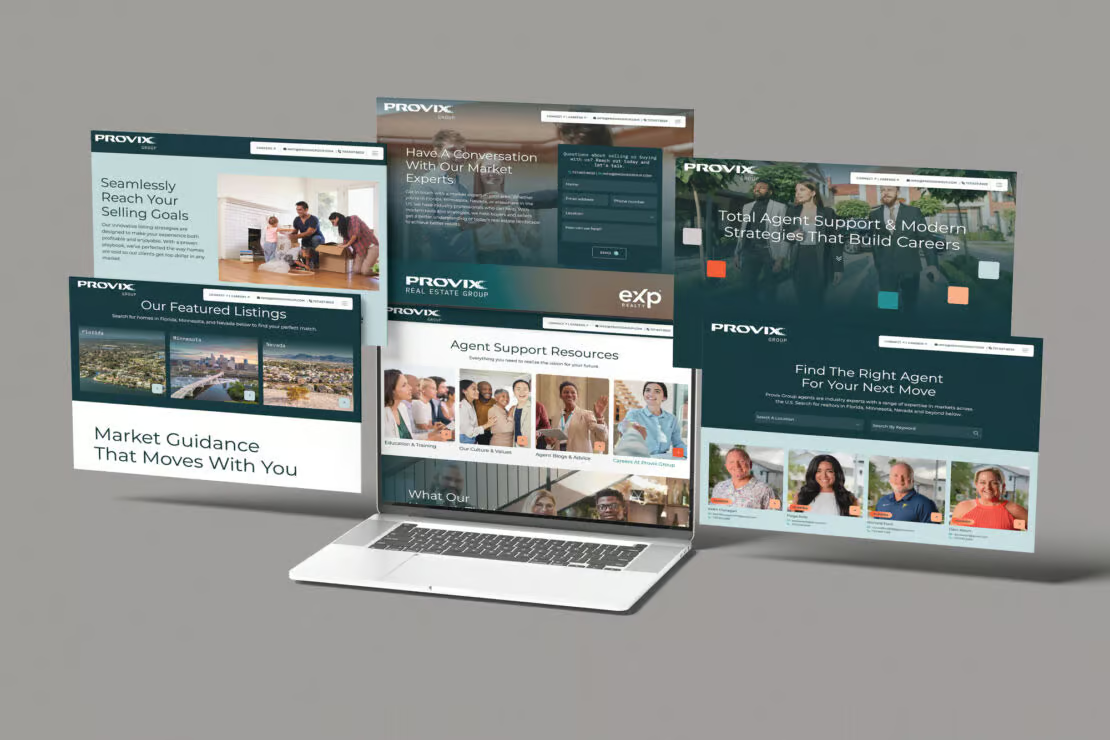
We believe our work is a true reflection of how we deliver on our mission to be: Inspired by Great Design, Driven By Strategy, Proven By Results. Wondering if Artifakt Digital is the right choice for you? Get started by having a look through our portfolio of work we’ve done for other real estate agents.