













Finding a Marketing Niche to Get Better Real Estate Leads

Most agents try to be all things to all people. When it comes to generating leads, they cast the widest net possible and focus on anything they can get.
And while that approach might bring in volume, it rarely brings in quality; and the difference between a high volume of mediocre leads and a smaller number of high-quality leads is the difference between working harder and working smarter.
There’s a real advantage to finding a niche, focusing on it, and building your entire marketing strategy around it. Not only because it positions you as an expert in your market and helps you get more deals, but because the deals you do get tend to be better; smoother transactions, better client relationships, and more referrals that come from people who see you as the obvious choice for a specific type of work.
A niche doesn’t limit your business. It focuses it. And when your marketing, your website, your content, and your brand are all aligned around a specific target audience, everything works harder for you because it’s all speaking to the same people with the same message.
This is also one of the areas where a strong digital strategy becomes especially powerful. When your niche is clearly defined, your website, your content strategy, your SEO, and even your AI visibility all become more effective because they’re built around a specific audience rather than trying to appeal to everyone. Search engines and AI platforms reward specificity, and the agents who own a niche online tend to dominate the search results for it.
★ Want to learn more about defining your audience? Have a look at these posts:
- Why Defining Your Target Audience Is the Most Important Part of Your Marketing Strategy
- Why You Should Define Your Anti-Persona (Who You Don’t Want to Work With)
- Why Your Target Audience Shouldn’t Be Anyone and Everyone
Focusing on Specific Types of Properties
As part of the natural progression of being a real estate agent, most begin their careers focusing on condos. Starting out, you’re bound to take whatever you can get, and getting leases and selling less-expensive condos is where most agents begin. After a couple of years doing that, and touring hundreds of condo buildings in your market, it’s only natural to become the local condo expert.
But it doesn’t need to end there. In fact, a lot of agents regret going all in as the condo expert later in their careers when their clients and sphere of influence are all looking for single-detached homes for their newly expanding families. They often then look for ways to transition their expertise but find it difficult because their entire brand is associated with a different type of property.
That said, this is actually proof that niching works, even when it happens by accident.
And there is still plenty of business to be had focusing on specific types of properties even if you do lose out on other deals because of that expertise. By becoming the go-to agent for lofts, Victorian homes, heritage properties, new builds, or any other type of niche property, you can establish yourself as the person people know to call when they want to buy or sell that kind of home. And as you do more deals involving those types of properties, you genuinely do become the expert, which reinforces the positioning even further.
The key is to be intentional about it. Instead of letting your niche happen to you, choose the one that aligns with the kind of work you enjoy, the kind of clients you want, and the kind of transactions you’re best at.
Focusing on Types of Transactions
Beyond property types, there are specific kinds of transactions that also lend themselves well to specialization.
If you’ve come across a transaction type that you excelled at, where you enjoyed the process, connected well with the people involved, and the deal went smoothly, that’s a strong signal that you’ve found a potential niche worth building around.
There are more transaction-based niches than most agents realize: helping people navigate a divorce sale, working with families who are downsizing, guiding first-time buyers, assisting with estate sales, handling relocations, or specializing in investment properties. Each of these comes with its own set of complexities, emotional dynamics, and specialized knowledge.
And that’s exactly why they make such effective niches. Most of these transactions require specific expertise that goes beyond just knowing the market. For example, when a couple is going through a divorce and needs to sell their primary residence, it’s rarely a straightforward sale. The dynamics are delicate, communication between the parties can be difficult, and the agent often needs to be part negotiator, part mediator, and part counselor. If someone is going through that kind of situation and they know it isn’t going to be easy, they’ll want to work with someone who has navigated it before, not just the local neighborhood expert.
When your marketing positions you as the agent who understands their specific situation, you become the obvious choice before they even pick up the phone.
★ Want to learn more about building your marketing around a specific audience? Have a look at these posts:
- How to Build a Real Estate Inbound Marketing Strategy Around a Single Niche
- Creating a Brand Associative Real Estate Marketing Strategy (to Get Better Leads)
- Building a Real Estate Solutions-Based Marketing Messaging Strategy
Focusing on Neighborhoods
Neighborhood specialization is the most common form of niche marketing in real estate, and for good reason. If people see you and your marketing consistently in their area, they’re likely to see you as the local expert. And there’s a natural credibility to it; if you live in the neighborhood and work in the neighborhood, you understand it in a way that an agent from across the city doesn’t.
There are a lot of ways to establish yourself as the neighborhood expert, like sponsoring community events, creating social content focused on the area, building neighborhood guides on your website, and making sure your name is visible through both digital and traditional marketing.
The more people see you associated with that community, the more they’ll think of you when they’re ready to make a decision about buying or selling.
One of the most effective, and most overlooked, parts of a neighborhood niche strategy is building your local search presence around it. That means optimizing your Google Business Profile, building a strong local review strategy, and creating content on your website that directly addresses the questions and needs of people in that specific area.
When someone searches for an agent in your neighborhood, or when an AI platform is asked to recommend one, the agent with the most visible, most consistent, and most authoritative local presence is the one who gets cited.
★ Want to learn more about building a local marketing strategy? Have a look at these posts:
- Building a Hyper-Local Real Estate Marketing Strategy
- How to Start Building a Solid Real Estate Local SEO Strategy
- How to Build an Online Review Strategy That AI Search Can’t Ignore
How to Start Building Your Niche Into Your Marketing
If you’ve identified a niche you want to focus on, the next step is to build it into every part of your marketing strategy. Here’s how to get started:
- Your content strategy is one of the most powerful tools for establishing niche authority. Build your blog around the topics, questions, and concerns that matter to the specific audience you’re targeting. If your niche is downsizers, write about the emotional and logistical realities of selling a family home, about what to look for in a smaller property, and about the financial considerations of downsizing. When your content speaks directly to a specific group of people, it attracts those people, and it signals to both search engines and AI platforms that you’re an authority on that subject.
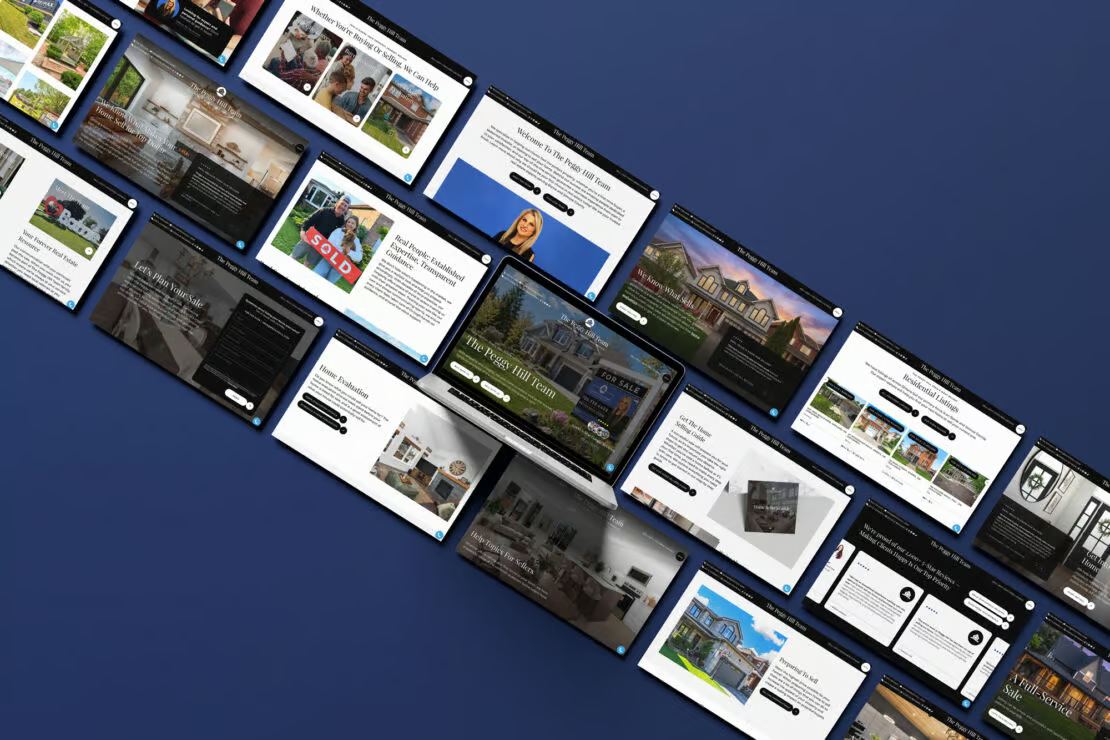
- Your website should reflect your niche in its design, its messaging, and its overall user experience. The imagery, the tone of the copy, the calls to action, and even the way the site is structured should all align with the audience you’ve chosen to serve. A website built for downsizers looks and feels very different from one built for first-time buyers, and it should.
- Your social media can be focused around the content and topics that resonate with your niche audience. You can even create dedicated accounts or content series around your specialization to build a community of people who identify with what you do.
- And your SEO and search strategy should target the specific terms and topics your niche audience is searching for, rather than competing for broad, high-volume keywords that every other agent in your market is also targeting. Building topic clusters around your niche gives you a much better chance of owning those search results than trying to rank for generic terms.
★ Want to learn more about building a content and search strategy around your niche? Have a look at these posts:
- Switching Your SEO Strategy from Keyword Matching to Topic Ownership
- The Benefits of Building a Long-Form Real Estate Content Strategy
- Creating an Evergreen Real Estate Content Strategy
Your Niche Is Your Competitive Advantage
While building a niche can help build your business, it also comes with one real risk: if the market shifts, a narrow focus can leave you exposed. If you’ve built your entire brand around condos and the condo market underperforms, you could feel the impact more than a generalist would.
But for most agents, the upside far outweighs the risk. A clearly defined niche gives your marketing a focus that makes every dollar and every hour more effective.
It positions you as an expert in a specific area, which builds trust faster than trying to be good at everything. It attracts higher-quality leads who are already aligned with the kind of work you do best. And in a world where search engines and AI platforms are increasingly rewarding specificity and authority, the agents who own a niche are the ones who show up, get recommended, and build the kind of business that compounds over time.
Want to get better, more qualified leads and build your authority? Our Inbound Marketing Guide is a walkthrough of the overall philosophy of inbound marketing, why it’s effective, and how you can build it into your own real estate marketing strategy to get better marketing results.